
Official Sources for a Gwinnett County Warrant Search
The Gwinnett County Sheriff's Office under Sheriff Keybo Taylor handles warrant service and courthouse security. Gwinnett Magistrate Court issues most arrest, search, and probation warrants and conducts first appearances. The Sheriff SmartWEB inmate portal is useful because it shows whether a person was already booked on a warrant. The court docket on the Tyler Odyssey portal can show bench warrants tied to ongoing cases.
Third party warrant sites are unreliable and can be out of date. Verify any reported warrant through the Sheriff, the issuing court, or an attorney.
Types of Warrants Issued in Gwinnett County
Warrants come in several types. Each type has its own trigger and its own resolution path.
- Arrest warrant: issued on probable cause for a charged offense.
- Bench warrant: issued by a judge after a missed court date, a contempt finding, or a violation of an order.
- Search warrant: authorizes a search of a place or property. Usually sealed before it is served.
- Probation warrant: issued when a probation officer alleges a violation of probation terms.
- Capias: a court order to bring a person into court after a default or other court trigger.
- Child support or civil contempt warrant: tied to a Superior Court order in a domestic case.
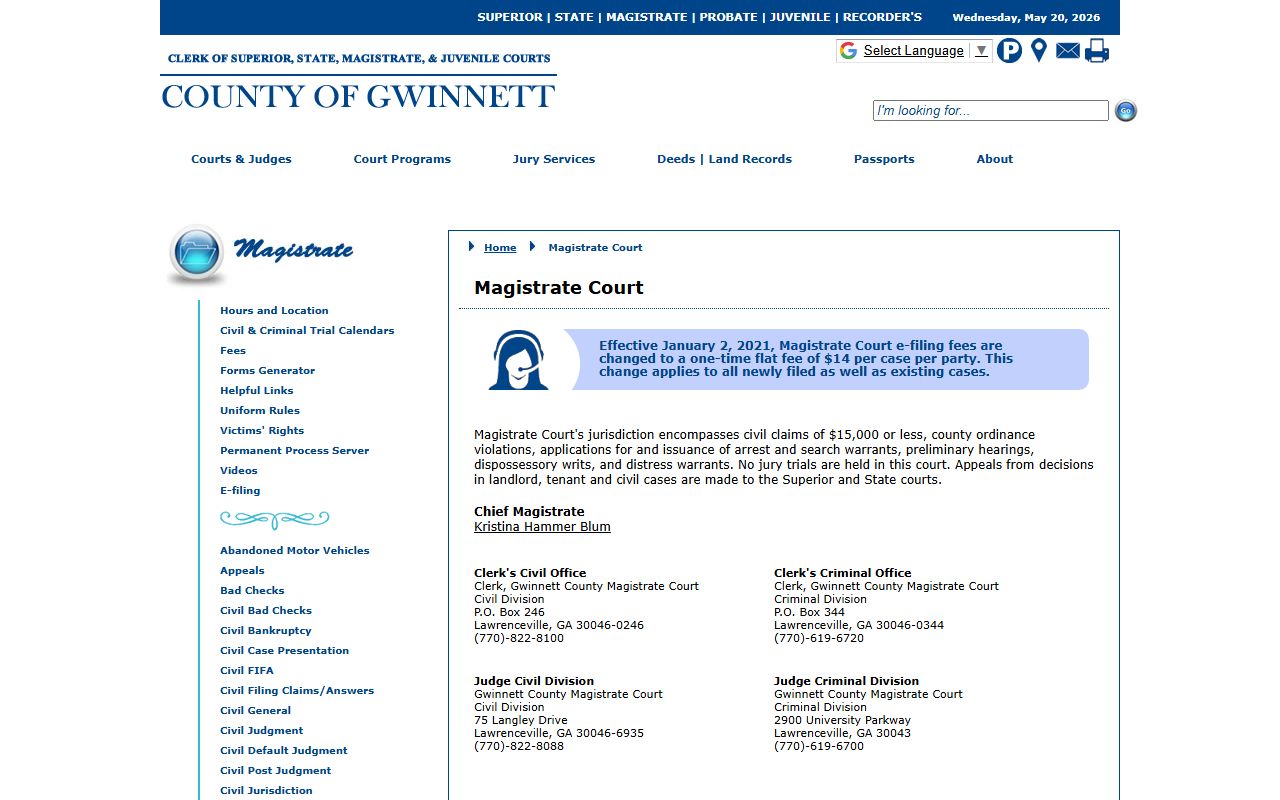
The Magistrate Court page covers the warrant application process, first appearances, and preliminary hearings that follow arrest.
Warrant Search Fields
Where a public warrant list or related case search exists, it usually accepts the same kinds of inputs. Name plus date of birth is the most reliable combination, because warrants tie to a person, not a vehicle or address.
| Field Label | Type | Required | Notes |
|---|---|---|---|
| Last Name | Text | Optional | Search by subject name where a public list is exposed. |
| First Name | Text | Optional | Narrows common names. |
| Date of Birth | Date | Optional | Often needed for accurate identity matches. |
| Warrant Number | Text | Optional | Exact match when known. |
| Case Number | Text | Optional | Tied to the underlying criminal case. |
| Search | Button | n/a | Runs the query in any public portal that allows it. |
What a Gwinnett Warrant Record Shows
An active warrant entry usually shows the subject's name, age or date of birth, the warrant number, the charge, the issuing court, the bond if set, the offense date, the arresting agency, and the status. A jail booking record can pull in the same data once the warrant is served.
- Subject name: full legal name as it appears on the warrant.
- Date of birth or age: identifier used to tell people with the same name apart.
- Warrant number: unique court or agency ID.
- Charge: the offense or the order the person allegedly violated.
- Issuing court: usually Magistrate, but Superior or State Court can also issue bench warrants.
- Bond: amount and type, or a no-bond note.
- Arresting agency: the agency that will or did serve the warrant.
- Status: active, served, recalled, or quashed.
Sealed warrants, juvenile warrants, and ongoing investigative warrants are not public.
Bench Warrants in Gwinnett County
Bench warrants are common in Recorder's Court, State Court, and Magistrate Court. They issue after a missed court date, a missed probation appointment, or a contempt order. A bench warrant can show up on the criminal docket in Odyssey and may also create a Georgia Department of Driver Services license hold in traffic matters. Recall is by motion to the issuing court, often after the person appears or arranges a bond.
Bond on a Gwinnett Warrant
Some warrants list a preset bond. Others require a Magistrate first appearance before bond can be set. A defendant may post a cash bond, a surety bond through a licensed bonding company, a property bond where allowed, or seek release on recognizance at first appearance.
A "no bond" entry can mean the judge has not set bond yet, that the offense is not bondable at that stage, or that another agency has a hold. Probation, parole, and out of county warrants can complicate release even after the local charge is bonded.
Resolving a Gwinnett County Warrant
Acting on a known warrant is usually safer than waiting. The Sheriff or the court can confirm whether the warrant is active and what bond is set. An attorney can file a motion to surrender, to recall a bench warrant, or to coordinate a turn-in. Talk to counsel before any visit to the courthouse or the jail.
- Confirm the warrant through the Sheriff, the issuing court, or an attorney.
- Find the issuing court and the charge.
- Check whether bond is set or whether a Magistrate hearing is required first.
- If represented, have counsel file the right motion or arrange surrender.
- If turning in alone, bring a valid ID, medication details, and bond funds if the warrant allows.
- After release or court action, confirm the warrant is recalled and that any related driver's license hold is cleared.
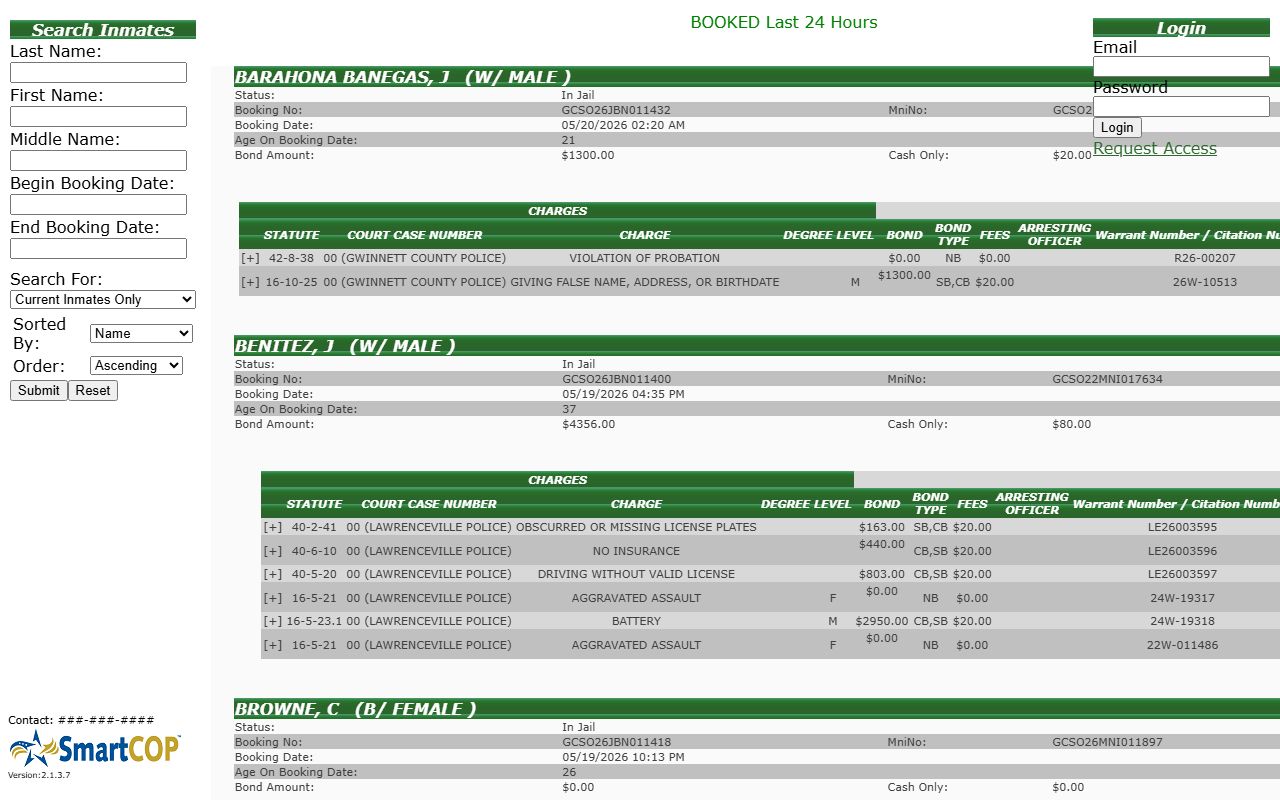
The Sheriff SmartWEB roster is the place to check if a warrant has been served and the person is now booked.
Why an Attorney Helps With a Gwinnett Warrant
A warrant case has many moving parts: bond, charge, court hearing, conditions of release, and any related driver's license hold. A defense attorney can confirm what is on the warrant, file a motion to recall a bench warrant, schedule a coordinated surrender, and argue for a reasonable bond at first appearance. For a referral, see the State Bar of Georgia or the Gwinnett County Bar Association. Defendants who cannot afford counsel can ask for court-appointed counsel through the Georgia Public Defender Council process.
A self-surrender without a lawyer is possible, but a person should still confirm the warrant before walking into the jail. Showing up to the wrong building or on the wrong day can waste hours and miss the bond window. Family members can help by lining up bond funds, work absence notes, and a ride home before the surrender, since release timing is hard to predict and can stretch into the night.
Federal Warrants From Gwinnett
A federal warrant is not a Gwinnett warrant. Federal warrants tied to a Gwinnett resident may be issued by the U.S. District Court for the Northern District of Georgia. Federal arrests are handled by the U.S. Marshals Service Northern District of Georgia office, the FBI, the DEA, or another federal agency. The federal docket is on PACER, with electronic filing on CM/ECF.
Sealed and Juvenile Warrants
Sealed warrants, juvenile warrants, and investigative search warrants are not public until they are served and unsealed by the court. Juvenile court warrants follow the limits in O.C.G.A. § 15-11-700. Grand jury related material is protected by O.C.G.A. § 24-12-21. The Open Records Act under O.C.G.A. § 50-18-72 can be used to withhold law enforcement records that would compromise an active investigation.
Note: A sealed warrant may not appear in any public portal. The lack of a hit is not proof that no warrant exists.