
How to Find Recently Released Gwinnett County Inmates
The first stop is the Sheriff's SmartWEB / JAIL View portal. It may show released or recently released inmates as a separate view. Search by name or booking number, then check the custody status line. For high-priority confirmations, call the Sheriff's jail information line.
- Open SmartWEB and select the released or all custody view if available.
- Search by booking number for a single match.
- Search by last name and first name if you do not have a booking number.
- Check the release date and status, and watch for transfer notes.
- If the person was sentenced, run a Georgia DOC search.
- If the case is federal, run the BOP locator search.
- For ongoing alerts, register through VINELink.
Online status can lag the physical release. Calling the jail line can confirm a recent change.
Setting Up Release Notifications With VINELink
VINELink is a national victim notification service. It covers many Georgia agencies and can notify a registered user when custody status changes for a named offender. Notification options usually include phone, text, and email. The system uses a PIN to confirm calls.
| Field Label | Type | Required | Notes |
|---|---|---|---|
| State | Dropdown | Yes | Select Georgia. |
| Name or ID | Text | Optional | Offender name or ID. |
| Facility / Agency | Filter | Optional | Agency filter where available. |
| Notification Setup | Phone / email / SMS | Required for alerts | User sets the notification method and PIN. |
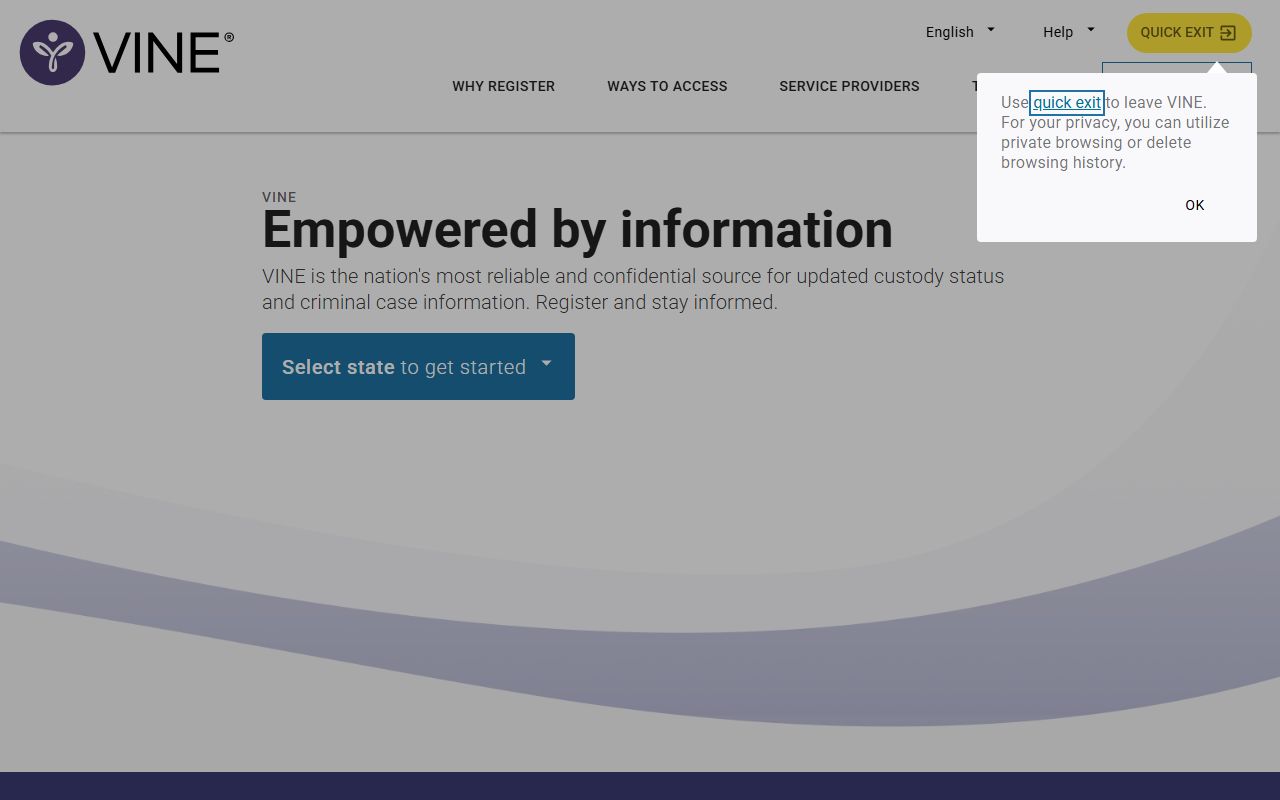
VINELink is the easiest way for victims and family members to set up alerts on Gwinnett custody changes without repeatedly checking the roster by hand.
Searching the Georgia Department of Corrections
For a sentenced state prisoner, search the Georgia Department of Corrections offender locator. The locator covers prisoners in DOC custody and may include parole and probation status for some cases. Gwinnett defendants who go to state prison after sentencing leave the county jail and show up in the DOC system.
| Field Label | Type | Required | Notes |
|---|---|---|---|
| GDC ID | Text | Optional | Best for an exact offender match. |
| Case Number | Text | Optional | If known. |
| Last Name | Text | Optional | Name search. |
| First Name | Text | Optional | Narrows results. |
| Gender | Dropdown | Optional | Choices set by the page. |
| Race | Dropdown | Optional | Registry categories. |
| Age Range | Text or dropdown | Optional | Narrows common names. |
A DOC profile usually shows the offender name, GDC ID, physical descriptors, current status, facility, sentence county, offense descriptions, sentence dates, maximum release date, parole status, and prior incarceration history.
Searching the Federal Bureau of Prisons
For a federal prisoner, search the Federal Bureau of Prisons inmate locator. The BOP locator covers federal inmates only and uses federal identifiers. A Gwinnett case in the U.S. District Court for the Northern District of Georgia that ends with a federal sentence will route the person into BOP custody.
| Field Label | Type | Required | Notes |
|---|---|---|---|
| Register / DCDC / FBI / INS Number | Text | Optional | Exact federal identifier search. |
| First Name | Text | Optional | Name search. |
| Middle Name | Text | Optional | Optional. |
| Last Name | Text | Optional | Required for name-only search. |
| Race | Dropdown | Optional | BOP categories. |
| Sex | Dropdown | Optional | Male or female. |
| Age | Text | Optional | Numeric. |
The Georgia Sex Offender Registry
The Georgia Sex Offender Registry is run by the GBI. Use it to search by name, address, county, or radius. Gwinnett County is one of the searchable areas. Registration status, address, and offense type appear in the result. The registry is not a complete criminal history check and is not a substitute for a court file.
| Field Label | Type | Required | Notes |
|---|---|---|---|
| Name | Text | Optional | Offender name search. |
| Address / City / County / Zip | Text or dropdown | Optional | Geographic search. |
| Radius | Dropdown | Optional | Distance around an address. |
| Offender Type / Status | Filter | Optional | Registry options. |
| Map Search | Map | Optional | Visual search by area. |
The registry's map search lets a Gwinnett resident check addresses near a school, day care, or home in a few clicks.
What Release Status Really Means
"Released" on a Gwinnett roster can mean several different things. The roster may say released after a bond, after a sentence served, after a court ordered release, or after a transfer to another agency.
- Bonded out: posted bond and waiting for a future court date.
- Sentence served: completed a county sentence.
- Court order: released by the judge on a motion or after a dismissal.
- Transferred: still in custody at Georgia DOC, the BOP, ICE, or another county.
- Administrative release: jail-side decision such as a clerical fix.
"No longer in custody" on a county roster does not erase the case. A criminal docket can stay open for plea, trial, or probation work after release. Employers and landlords should not treat a release roster as a conviction record.
Parole and Probation Status in Gwinnett
A person released from a Georgia DOC sentence may still be under parole supervision. Parole is managed by the State Board of Pardons and Paroles. A person sentenced to probation in Gwinnett may be supervised by the Georgia Department of Community Supervision under the conditions in the sentencing order. Either supervision type can include reporting, drug testing, employment rules, address rules, travel limits, and curfews.
A violation can route the case back to court and may lead to a warrant or a hold at the Gwinnett jail. For active warrants tied to a probation case, see the Gwinnett warrant records page.
Verifying a Release in Person or by Phone
Online status can lag the physical release. For a same-day or safety-sensitive check, call the Sheriff's jail information line. For a verified court record on the case, contact the Clerk of Courts. The Clerk can confirm a court order tied to release, such as a dismissal, a sentence to time served, or a bond modification.
Family members and friends planning to pick a person up should ask the jail about pickup location, expected release window, and any conditions of release. People released late at night may need to wait for transit options to resume in the morning.
Reentry Resources in Gwinnett County
People leaving Gwinnett custody often need help with ID, housing, work, health care, transit, and legal cleanup. Georgia legal aid services, county human services offices, and local nonprofits cover much of this work.
Atlanta Legal Aid Society
Civil legal help for metro Atlanta, including Gwinnett
Common post-release legal needs include record restriction, probation compliance, driver's license reinstatement through Georgia DDS, child support modification, and warrant clearance.
Voting and License Issues After Release
Voting rights in Georgia are restored after a felony sentence ends, including incarceration, probation, and parole. People with open sentence obligations should confirm status before registering. Firearm rights restoration is separate and legally complex. Driver's license reinstatement runs through Georgia DDS and depends on the suspension reason, fees, insurance, DUI school where ordered, and any court clearance.
Identification is often the first hurdle. Most released people need a state ID, a birth certificate, and a Social Security card before they can apply for housing, jobs, or benefits. The state DDS handles ID and license matters, and the Georgia Department of Public Health handles birth records. Plan to bring the release paperwork from the jail, because some agencies will ask for it.
Record Restriction After a Gwinnett Release
People who finish a Gwinnett case may qualify for record restriction under O.C.G.A. § 35-3-37. First Offender Act discharge under O.C.G.A. § 42-8-62 can change how a case is treated after the program ends. Eligibility depends on the case outcome, the charge type, and any later convictions.
The process can involve the arresting agency, the prosecutor, the court, and the GBI's GCIC system. A self-help approach can work for clear non-conviction cases. A contested case usually needs a lawyer.