
How to Search Gwinnett County Court Records
The official starting point is the Gwinnett Courts case search page. From there, most Superior, State, Magistrate, and Probate files are reached through the Tyler Odyssey public access portal. County traffic and code cases sit in a different system, the Recorder's Court payment and case portal. City traffic tickets go to the issuing city's municipal court instead. Public index searches are free.
The official Gwinnett Courts homepage at gwinnettcourts.com lists each court type, with links to forms, judges, and the case search page.
Before you start, have the case number, the citation number, or the full party name ready. Exact case numbers return the best results. Name searches need care, because common names can return many rows.
A typical search takes a few minutes if the case number is known. Name-only searches can take longer.
- Open the Gwinnett Courts case search page and pick the right portal for the case type.
- In Odyssey, choose Smart Search, Search by Case, or Search by Party. Smart Search accepts a case number, a citation, or a name.
- Type the cleanest identifier first. Use a case number if you have one. If not, search last name, then add a first name to narrow results.
- Apply filters such as court location, case type, filing date range, or status when the portal offers them.
- Open a case row to see parties, docket entries, hearings, and disposition data where public.
- If the document image is not available online, note the case number and ask the Clerk of Courts for a certified copy.
The official case search landing page shows which courts share Odyssey and which one uses a separate portal. View the official Gwinnett Courts case search page.
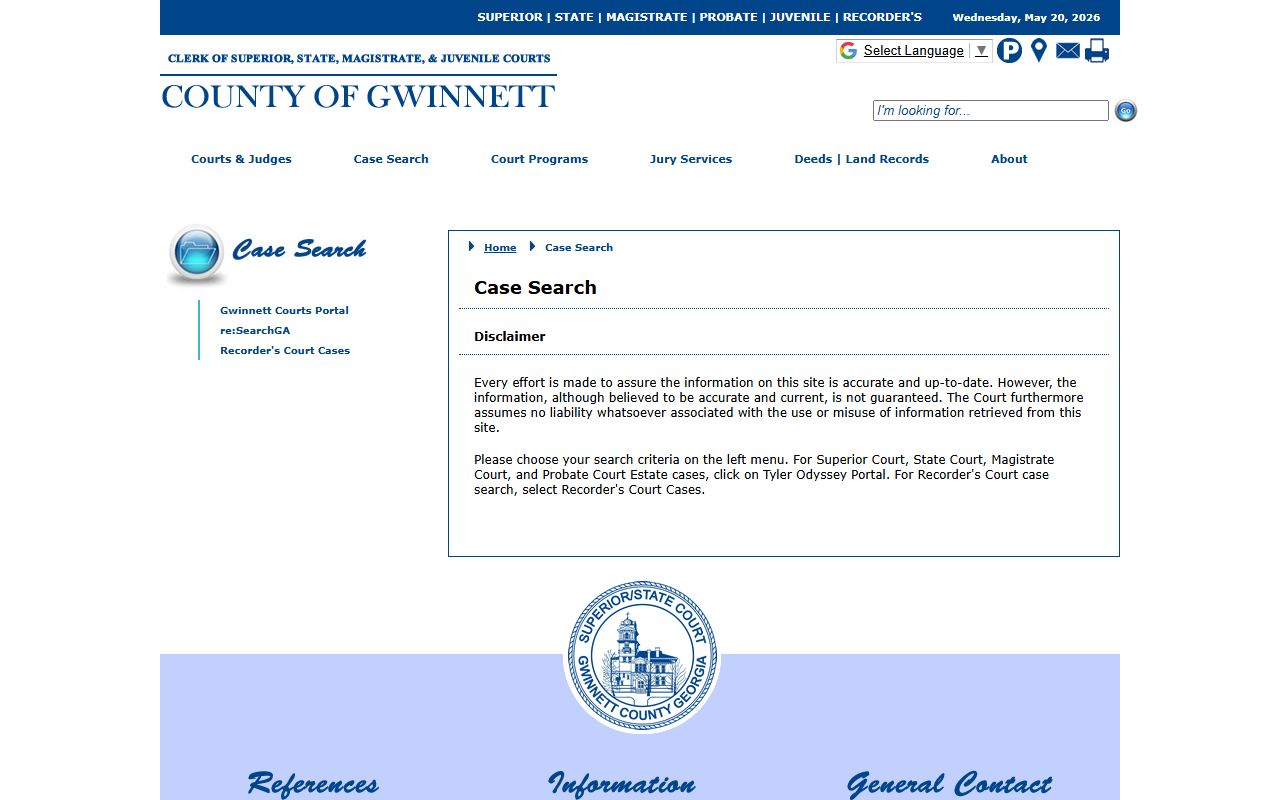
The case search hub links out to Odyssey for most trial-court records and to the Recorder's Court portal for county traffic and code cases, which keeps the two record sets apart by design.
The Gwinnett County Judicial System
Gwinnett sits in the Ninth Superior Court District and the Gwinnett Judicial Circuit. The county runs a full set of trial courts on one campus in Lawrenceville. Gwinnett Superior Court hears felony criminal cases, divorces, land title fights, equity matters, and bigger civil suits. State Court takes misdemeanor cases, traffic misdemeanors, and civil cases inside its limit. Magistrate Court handles small claims, dispossessory landlord cases, warrants, and first appearances. Probate Court covers estates, wills, guardianships, vital records, weapons carry licenses, and marriage licenses. Juvenile Court handles delinquency, dependency, and CHINS matters. Recorder's Court handles county traffic and code cases.
Appeals from Gwinnett trial courts go to the Court of Appeals of Georgia or, for case types within its jurisdiction, the Supreme Court of Georgia. The Administrative Office of the Courts publishes statewide judiciary information.
Case flow: Magistrate or Recorder's Court › State Court › Superior Court › Court of Appeals of Georgia › Supreme Court of Georgia.
| Court | Role | Address |
|---|---|---|
| Superior Court | Felony, divorce, equity, land title, general civil | 75 Langley Dr, Lawrenceville, GA 30046 |
| State Court | Misdemeanor, civil, traffic misdemeanors | 75 Langley Dr, Lawrenceville, GA 30046 |
| Magistrate Court | Small claims, dispossessory, warrants, first appearances | 75 Langley Dr, Lawrenceville, GA 30046 |
| Probate Court | Estates, marriage, guardianship, vital records, weapons carry | 75 Langley Dr, Lawrenceville, GA 30046 |
| Juvenile Court | Juvenile delinquency, dependency, CHINS | 75 Langley Dr, Lawrenceville, GA 30046 |
| Recorder's Court | County traffic, code, ordinance cases | 75 Langley Dr, Lawrenceville, GA 30046 |
| Municipal Courts | City traffic and ordinance cases | City-specific |
Each trial court keeps its own calendar. The Clerk of Courts is the unified custodian for Superior, State, Magistrate, and Recorder's records. Probate Court keeps its own filings.
Gwinnett County Courthouse Locations
The main public court campus is the Gwinnett Justice and Administration Center, often called the GJAC, at 75 Langley Drive in Lawrenceville. The Sheriff's office, jail, prosecutors, and county departments are also tied to this campus. See the Gwinnett County government homepage for office maps and the Gwinnett Courts homepage for court directories.
Gwinnett Justice and Administration Center
75 Langley Drive
Lawrenceville, GA 30046
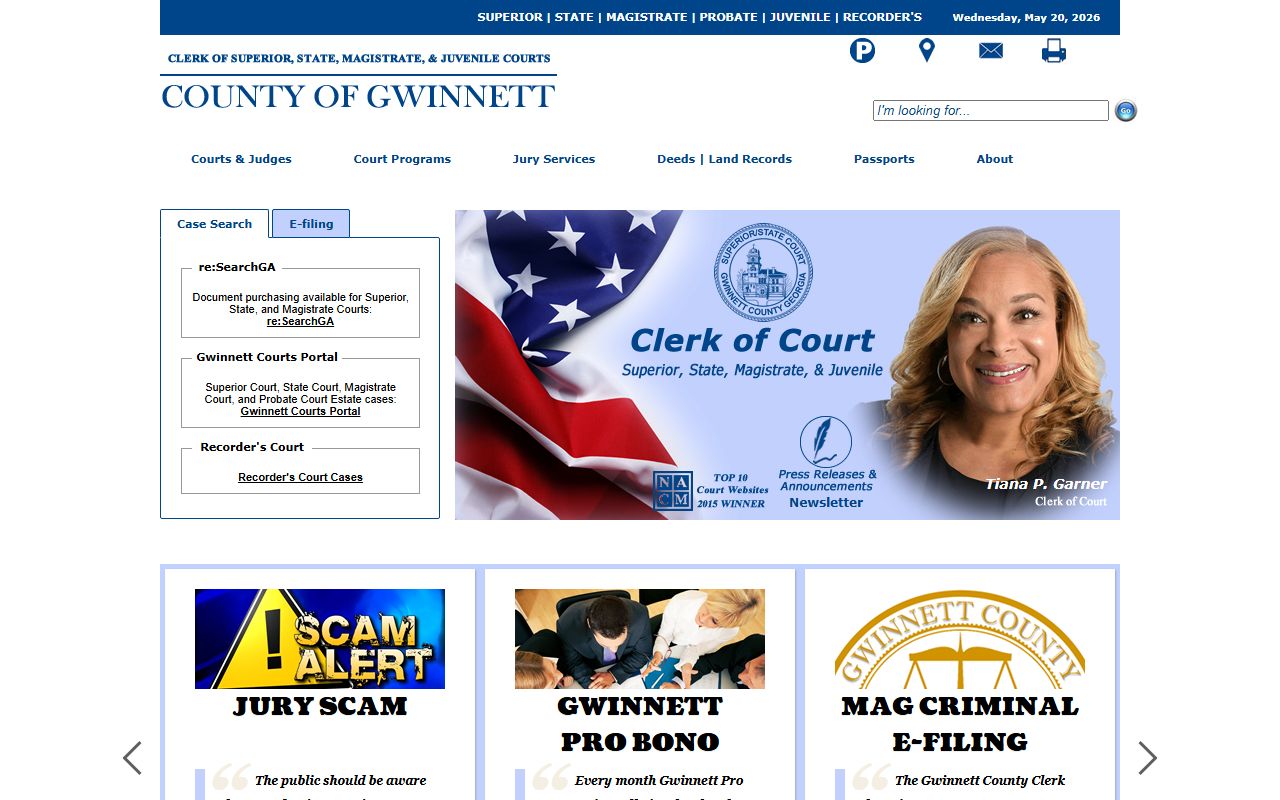
The Gwinnett Courts portal links every trial court on the GJAC campus, with separate landing pages for each court type.
Types of Court Records Available in Gwinnett County
Gwinnett produces every common Georgia trial-court record. Most files are public unless a statute, a sealing order, or a privacy rule blocks access. Court records here cover criminal, civil, family, probate, juvenile, and traffic cases, with each file type kept by the court that handles it.
Researchers often need more than one record set. A divorce decree is a Superior Court file. A speeding ticket is a Recorder's Court file. A jail booking is a sheriff record. Each lives in its own system.
- Criminal records: warrants, accusations, indictments, plea papers, sentencing orders, and probation entries. Felonies go to Superior Court; misdemeanors go to State or Recorder's Court.
- Civil records: complaints, answers, motions, judgments, liens, and garnishments. Magistrate Court handles small claims and evictions.
- Family and divorce records: Superior Court holds divorce, custody, child support, and name changes. Some files are redacted to protect minors.
- Probate records: wills, letters of administration, guardianship orders, inventories, and final returns.
- Traffic records: county tickets in Recorder's Court, misdemeanor traffic in State Court, city tickets in the city's municipal court.
- Juvenile records: limited public access. Most files are sealed by Georgia law.
The full record set covers warrants, dockets, fines, bonds, and dispositions. Read more on the Gwinnett County court records page for record types and search steps.
What Gwinnett County Court Records Show
A typical Gwinnett court file lists the case number, the court, the filing date, the case type, the parties, the attorneys, the docket events, the hearings, the disposition, and any judgment, fine, or bond. Some files also list payment status and probation terms. Sealed material, full birth dates, Social Security numbers, and protected addresses do not appear in public views.
| Field | What It Shows |
|---|---|
| Case Number | Unique court identifier; format varies by court and case type. |
| Court / Location | Superior, State, Magistrate, Probate, Juvenile, or Recorder's. |
| Filing Date | Date the case was opened or the citation was filed. |
| Parties | Plaintiff, defendant, petitioner, respondent, or estate names. |
| Charges / Cause | Charge text, statute reference, or civil cause of action. |
| Disposition | Plea, verdict, ruling, dismissal, or other final outcome. |
| Sentence / Judgment | Sentence, fine, probation, judgment amount, or order. |
| Docket Events | Filings, motions, hearings, orders, and continuances. |
Common docket terms include FTA (failure to appear), rule nisi (an order setting a hearing), nolle prosequi (the state drops a charge), and dead docket (a case taken off the active calendar but not dismissed).
Public Access Laws for Gwinnett County Court Records
Georgia treats public records as open by default. The framework starts with the Georgia Open Records Act and then branches into court rules and topic-specific statutes such as juvenile and adoption confidentiality. The Georgia Attorney General open government page sums up the access rules. Court files are usually requested through the Clerk of Courts; agency records go through the holding department.
Key Statutes:
O.C.G.A. § 50-18-70 sets the policy that Georgia records are open to the public unless a law makes them confidential.
O.C.G.A. § 50-18-71 sets the response time and the fee rule for open records requests, including search, copy, and redaction costs.
O.C.G.A. § 50-18-72 lists exemptions, such as law enforcement, medical, security, and other categories that may be withheld or redacted.
O.C.G.A. § 15-11-700 limits public access to juvenile court records to set parties and authorized agencies.
O.C.G.A. § 35-3-37 sets the rules for criminal record restriction, which can remove eligible records from public criminal history checks.
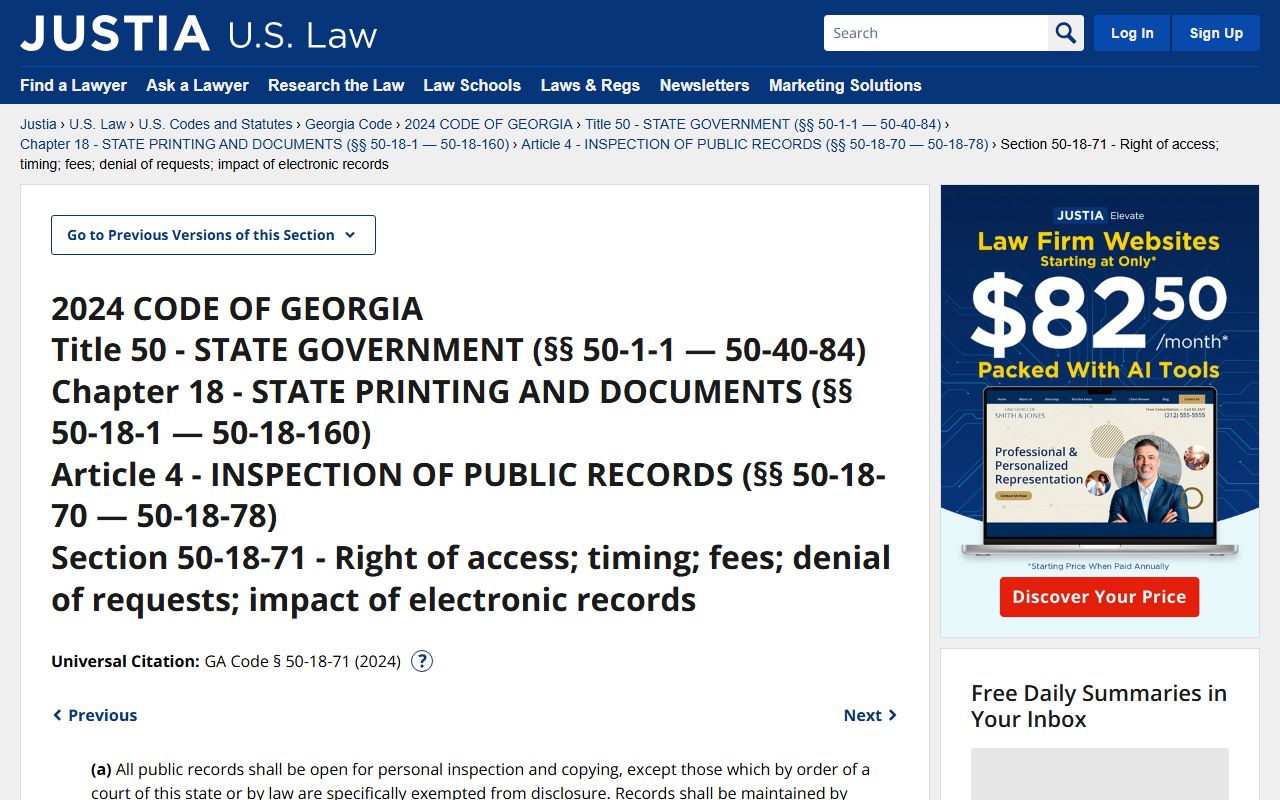
The Open Records Act sets fees and response windows, but court case files follow the clerk's own request channels rather than ordinary agency request lanes.
Records That Are Restricted or Confidential
Some Gwinnett records are off limits to the public. Juvenile delinquency files, adoption files, sealed criminal files, mental health filings under Title 37, and grand jury notes are protected by Georgia law. O.C.G.A. § 19-8-23 keeps adoption records confidential, and O.C.G.A. § 24-12-21 protects grand jury secrecy. Other files are public with redactions for Social Security numbers, account numbers, and minor names.
A person who wants a sealed file unsealed has to ask the court that sealed it. Clerk staff cannot ignore a seal. The request goes in as a motion, with notice to the parties and a stated legal basis. The judge weighs public access against privacy, safety, juvenile, medical, and statutory rules.
First Offender Act discharge under O.C.G.A. § 42-8-62 changes how a case is treated after a person finishes the program.
Specialty Courts in Gwinnett County
Gwinnett uses Georgia's accountability court framework for problem-solving programs. Drug or treatment court uses judge-led supervision, frequent testing, treatment, and graduated sanctions to deal with substance use cases. Mental health court coordinates court review with treatment providers for eligible defendants whose mental health needs drive their case. Veterans treatment programs may be available through local accountability court partners and can use VA referrals, mentors, and treatment plans.
Each program has eligibility rules, a clinical review, and prosecutor and defense input. Completion can cut jail time and improve case results.
Note: Accountability court rosters and judges change. Confirm program status through the Gwinnett Superior Court page before you apply.
Gwinnett County Sheriff and Jail
Sheriff Keybo Taylor leads the Gwinnett County Sheriff's Office, which runs the county jail, courthouse security, warrant service, and inmate services. The public inmate lookup is the JAIL View / SmartWEB portal. Search by name or booking number to see custody status, charges, bond, and current housing.
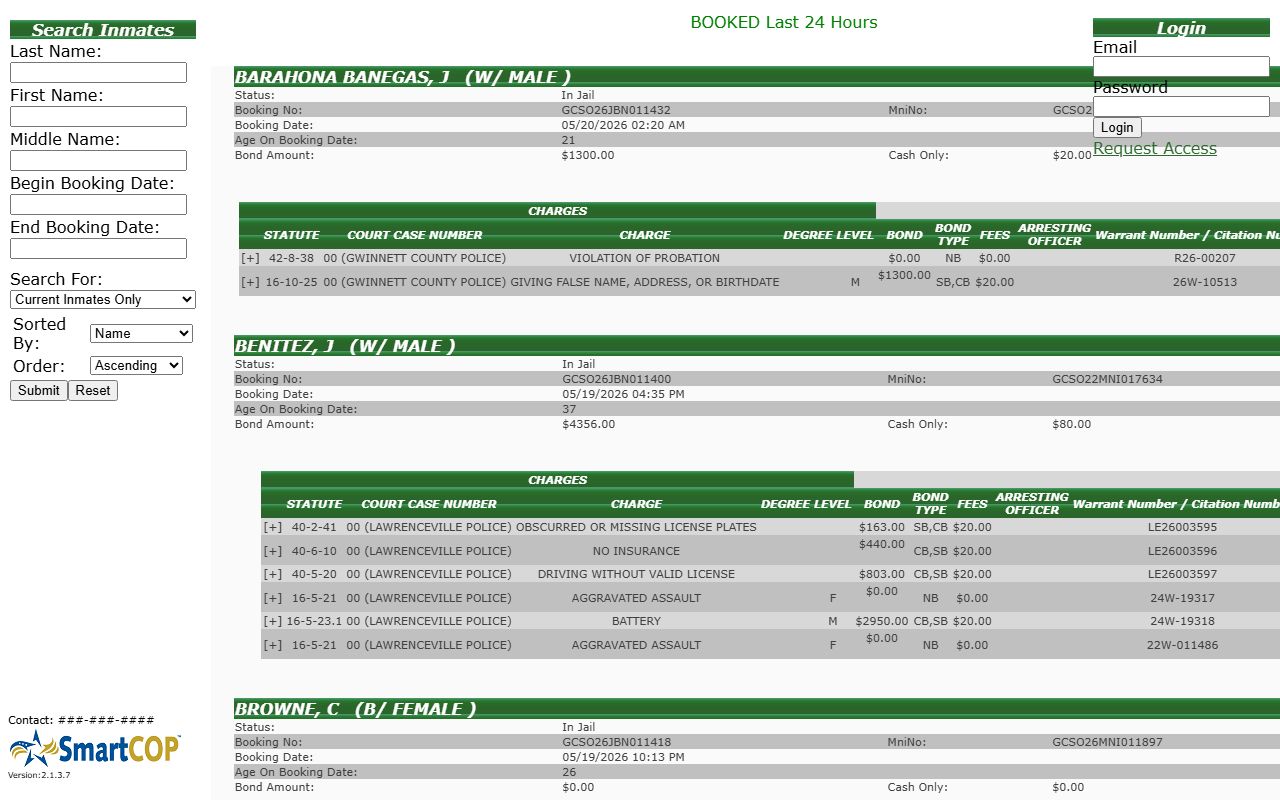
The jail roster updates as people are booked or released, but it is not a court docket. For full booking details, see the Gwinnett County inmate records page. For active warrants, see the Gwinnett County warrant records page.
Marriage, Divorce, and Probate Records
Marriage licenses in Gwinnett come from Gwinnett Probate Court, not the Clerk of Courts. Divorce cases are Superior Court files and run through the Clerk of Courts and the Odyssey portal. Estate, will, guardianship, and conservatorship records also sit at Probate. For more, see the Gwinnett marriage and divorce records page and the probate records page.
- Testator
- The person who made the will.
- Executor
- The person named in a will to handle the estate.
- Conservator
- A person who manages money or property for an adult or minor under a court order.
- Guardian
- A person who handles care or daily decisions for a minor or adult who cannot do so.
Gwinnett County Court Records Fees
Searching the public index is free. Certified copies, plain copies, document images, and older file pulls can have a fee. Each court office sets its own schedule. Probate fees follow the Probate Court schedule. The Clerk of Courts handles Superior, State, Magistrate, and Recorder's file fees.
| Item | Source |
|---|---|
| Public index search | Free through Odyssey or the Recorder's Court portal. |
| Plain copies | Verify per page rate with the Clerk of Courts. |
| Certified copies | Per page rate plus a certification fee. Confirm with the Clerk before paying. |
| Probate certified copy | Set by the Probate Court fee page. |
| Open records request fees | Search, retrieval, and copy costs under O.C.G.A. § 50-18-71. |
Note: Confirm the current fee with the Clerk of Courts before mailing payment, because rates can change.
How to Read Gwinnett County Court Records
A booking is not a conviction. A charge is not a finding of guilt. A docket entry is a short note about a court event. To know how a case ended, look for words like disposition, judgment, sentence, final decree, or order entered. If the docket shows nolle prosequi, the state dropped the charge. If it shows dead docket, the case is off the active calendar but not always dismissed for good.
For criminal files, watch the gap between charge and conviction. A felony case can pass through arraignment, plea, trial, and sentence. A misdemeanor can settle with a fine. A traffic ticket can resolve with a payment, a plea, or a hearing.
Names can be tricky in a fast-growing county. Try maiden names, married names, hyphenated surnames, and common spelling shifts. Adding a date of birth or a citation number cuts down false hits.
Accuracy and Record Limits
Online portals can lag. A new filing may take time to show up in Odyssey, and the Recorder's Court portal may not show a case the day it is filed. Older files may not be online at all. Some cases are sealed or restricted by law and never appear in the public view.
Note: Always confirm key facts with the Clerk of Courts or the issuing court before relying on a portal print for legal action.
History of Gwinnett County Courts
Gwinnett County was created in 1818 and named for Button Gwinnett, a signer of the Declaration of Independence. Lawrenceville became the county seat and remains the heart of court life. As the county grew from rural to suburban to metro, the court load grew too. The modern Gwinnett Justice and Administration Center now hosts all the trial courts and most county offices on one campus.
Today, the Gwinnett courts handle high-volume civil filings, dispossessory cases, traffic citations, misdemeanor and felony cases, divorce matters, juvenile cases, and probate work. Online search portals, eFiling, and shared court calendars now do much of the work that used to need an in-person file pull.
Frequently Asked Questions
How do I search Gwinnett County court records?
Start at the official Gwinnett Courts case search page. Use the Odyssey portal for Superior, State, Magistrate, and Probate cases. Use the Recorder's Court portal for county traffic and code cases. Search by case number when you can. If you only have a name, use the last name first.
Which court handles divorce in Gwinnett?
Divorce is a Superior Court matter. Search the case in Odyssey and ask the Clerk of Courts for a certified decree. Some divorce material is redacted to protect minors and to protect financial details.
Where do I get a marriage license?
Marriage licenses come from Gwinnett Probate Court. Plan to bring valid ID for both applicants and to pay the Probate fee. See the marriage and divorce records page for the full process.
More on the Gwinnett County Court Records FAQ page.