
What a Gwinnett County Court Docket Shows
A docket is a date-ordered log. It lists every filing the clerk receives, every order the judge signs, every hearing the court sets, and every event that moves the case forward. A docket is not the full document file. A docket entry might say "motion filed" without showing the motion text. To read the underlying paper, ask the Clerk of Courts or use the document viewer in the portal when public.
Most dockets show the same core data: case number, parties, court location, judicial officer, hearing dates, and event descriptions. The exact look of the docket depends on the court and on the portal view.
| Docket Field | What It Shows |
|---|---|
| Case Number | The unique court file ID. |
| Parties | Plaintiff, defendant, petitioner, respondent, estate, or ward. |
| Court / Judicial Officer | Superior, State, Magistrate, Probate, Juvenile, or Recorder's, with judge. |
| Event Date | The date the event was filed or set. |
| Event Type | Filing, motion, hearing, order, continuance, or disposition. |
| Event Text | Short note describing what was filed or what the judge did. |
| Document Reference | Link or note tying the entry to a document, where public. |
How to Search Gwinnett County Hearings and Dockets
The official starting point is the Gwinnett Courts case search page. The Tyler Odyssey portal hosts the docket for most trial courts. The Recorder's Court portal handles county traffic and code dockets.
Plan the search around what you have. A case number returns one docket. A name returns a list. A hearing date returns the day's calendar in courts that publish a hearing search.
- Open the case search page and pick the right portal for the case type.
- In Odyssey, choose Smart Search or Search Hearings if you want a calendar view.
- Enter the case number when you have one. If not, use a last name and add a first name to narrow the list.
- Open the result and click into the docket tab to read events in date order.
- Scroll the bottom of the docket for the most recent entries. Some portals sort the newest first; some sort oldest first.
- For a stamped or certified version of an order, ask the Clerk of Courts.
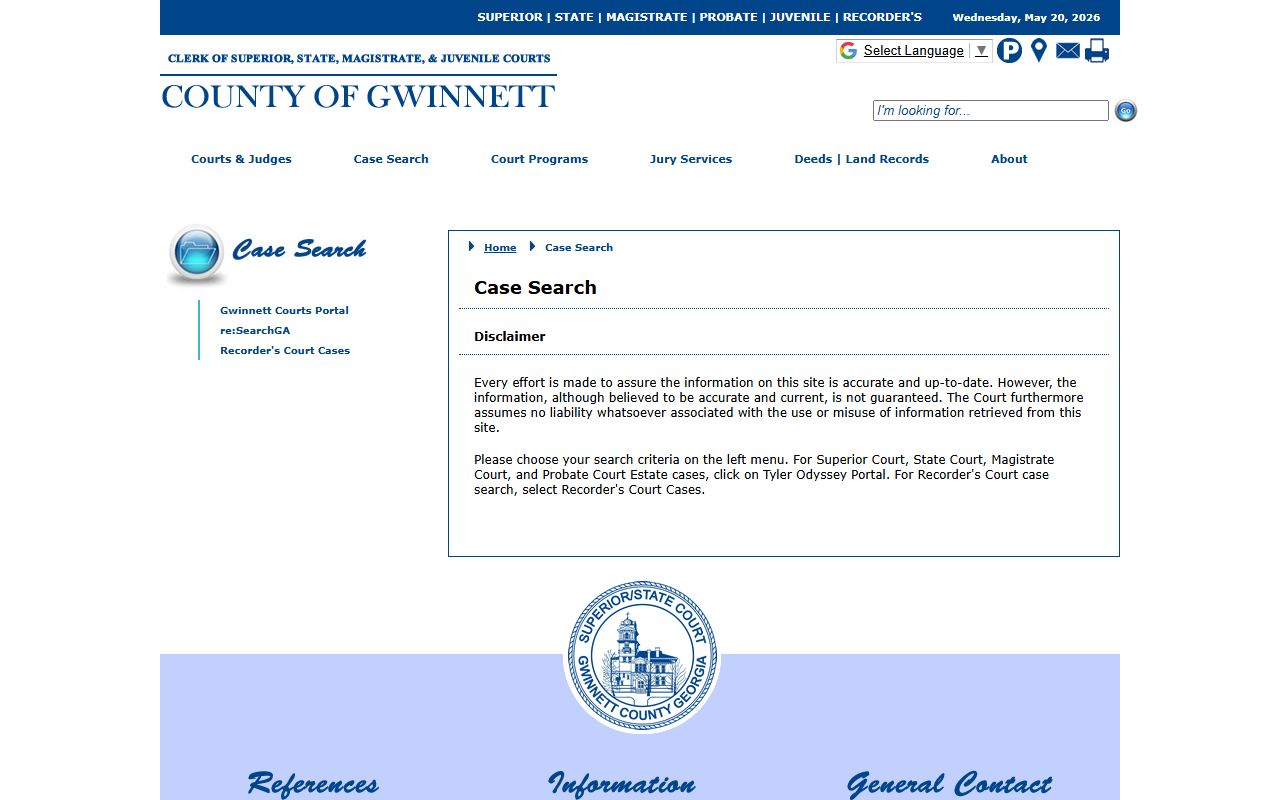
The official case search page is the cleanest route to the docket. It points users at the portal that holds the right case type.
Reading Gwinnett County Docket Entries
Dockets use short text labels for common events. The same word can mean different things in civil and criminal cases. The list below covers the language most Gwinnett users see.
- Filed: a document was received by the clerk and added to the case.
- Service perfected: a party was legally served.
- Answer filed: the defendant or respondent formally replied.
- Rule nisi: an order setting a hearing and telling parties to appear.
- Calendar call: the court event used to set or confirm trial readiness.
- Continuance granted: the hearing was moved to a later date.
- Motion pending: a request is filed but not ruled on yet.
- Order entered: the judge signed and the clerk filed an order.
- Disposed: the case or charge has a final outcome.
- Nolle prosequi: the state declined to pursue a charge.
- Dead docket: a criminal case removed from the active calendar, but not always dismissed.
- FTA: failure to appear; can lead to a warrant or a license hold.
- Letters issued: Probate Court authorized a representative, guardian, or conservator.
Gwinnett County Court Calendars by Court
Each trial court keeps its own calendar. Some courts publish a daily hearing list through the Odyssey portal. Others post calendars on the court's own page. Superior Court hears felony, divorce, equity, and big civil matters. State Court handles misdemeanor and civil cases. Magistrate Court hears small claims, dispossessory, and first appearances. Probate Court hears estate, guardianship, and marriage matters. Juvenile Court hears delinquency and dependency matters. Recorder's Court hears county traffic and code cases.
Morning calendars run heavy. First appearances, traffic calls, and Monday criminal lists draw crowds. Allow extra time for security and parking. Court calendars and clerk counters can run on different hours.
Criminal Docket Entries
Criminal dockets in Gwinnett can be busy. A felony case may move from warrant or arrest, to first appearance, to indictment, to arraignment, to motion practice, to plea or trial, and finally to sentence. Each step shows up as a separate event line on the docket. The bond status, the bond amount, and any condition of release also appear on the docket.
A booking is not a conviction. The jail roster at SmartWEB shows custody status. The docket shows what the court is doing about the charge. For the full booking detail, see the Gwinnett inmate records page.
Civil and Family Docket Entries
Civil and family dockets cover complaints, answers, motions, discovery notices, hearing settings, and orders. Family cases include divorce, custody, child support, contempt, and name changes. Some family entries may be limited because the file holds minor-name and financial detail that gets redacted.
Magistrate Court civil dockets cover small claims and dispossessory cases. These move fast. A dispossessory case can go from filing to writ of possession in a few weeks. Garnishments show up as separate civil filings with the garnishee's own docket entries.
Recorder's Court Dockets
Recorder's Court county traffic and county ordinance dockets sit in a separate system. Use the Recorder's Court portal to find a case by citation number, name, or date of birth. The docket here is shorter than a Superior Court docket because the case set is simpler: citation filed, plea, fine, disposition, or failure to appear.
Note: A paid citation may count as a plea. Read the portal status before clicking pay, because a guilty plea can route to your Georgia DDS driver history.
Probate Court Docket Entries
Probate dockets cover estates, wills, guardianships, conservatorships, marriage licenses, and weapons carry licenses. The docket shows letters issued, inventories filed, annual returns, citations to heirs, hearings on caveats, and discharge orders. Some probate matters involve mental health filings under Georgia Title 37, and those entries can be limited because the underlying file is protected.
A probate case can run for months or years. Estates with real property, contested wills, or out of state heirs take longer. The docket is the best place to track deadlines for inventory, annual return, and final settlement.
Confidential Docket Limits
Some docket entries are not public. Juvenile cases under O.C.G.A. § 15-11-700 are mostly sealed. Adoption cases under O.C.G.A. § 19-8-23 are confidential. Grand jury notes under O.C.G.A. § 24-12-21 are off limits. Sealed exhibits and sealed motions appear on the docket only as locked entries. For more on sealed and restricted files, see the Gwinnett County court records page.
Note: Dockets can lag the courtroom. A ruling made today may take a day or two before it shows up in the online docket view.