
How to Search Gwinnett County Criminal Records
The official starting point is the Gwinnett Courts case search page. From there, most criminal case files run through the Tyler Odyssey portal. The custody side, including current bookings and recent releases, lives at Sheriff SmartWEB. A statewide criminal history check is a different product through the GBI.
- Open the case search page and pick the Odyssey portal for Superior or State Court matters.
- Use Smart Search to enter a case number, a citation, or a party name.
- If you only have a name, search the last name first, then add the first name to narrow common-name lists.
- Apply filters for court location, case type, and date range when shown.
- Open a case to read charges, bond, hearing dates, and any disposition.
- For custody status, run a second search on SmartWEB by name or booking number.
- For a certified copy of an indictment, plea, or sentence, ask the Clerk of Courts.
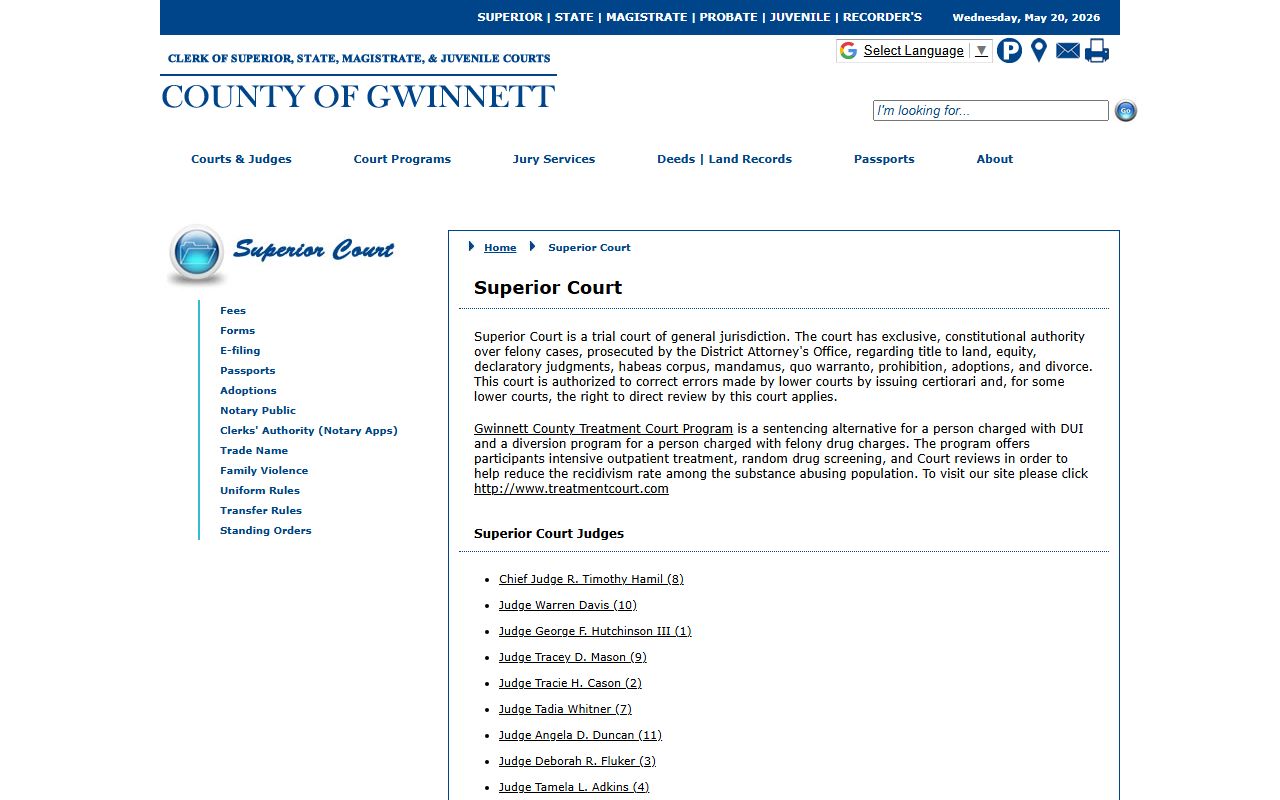
The Superior Court page lists felony case types, divisions, judges, and forms. It is the right starting place when the charge sits above the misdemeanor line.
Arrest Record vs Court Record
An arrest record is what the Sheriff or police agency creates when they book a person. A court record is what the court creates after a charge is filed. They overlap, but they answer different questions.
| Topic | Arrest Record | Court Record |
|---|---|---|
| Source | Sheriff or arresting agency | Superior, State, or Recorder's Court |
| Search Tool | SmartWEB jail roster | Odyssey case portal |
| What It Shows | Booking, charges at intake, bond, housing | Filed charges, motions, plea, sentence |
| Updates | Real-time on intake and release | Updated by clerk after each filing |
| Best For | Is the person in custody right now? | What is happening with the charge? |
Booking does not prove guilt. Charges can be rejected, reduced, dismissed, or dead-docketed. The court file is the right place to read the outcome.
Charges, Bonds, and Dispositions in Gwinnett
Felony cases route to Gwinnett Superior Court. The District Attorney's office at gwinnettcounty.com/departments/districtattorney prosecutes felonies. DA Patsy Austin-Gatson leads the office. Misdemeanors route to State Court, and the Solicitor-General handles State Court prosecution. County traffic and ordinance cases route to Recorder's Court.
A bond may be set in advance for some charges or set by a Magistrate judge at first appearance. The bond amount and the bond type appear on the criminal docket and on the jail profile. A no-bond status can mean the judge has not set bond yet or that the charge or hold is not bondable at that stage. For active warrant searches, see the Gwinnett warrant records page.
Common docket terms include nolle prosequi (state drops a charge), dead docket (case removed from the active trial calendar), bound over (lower court sent a case up), and FTA (failure to appear, which can trigger a bench warrant).
Charges vs Convictions
A charge and a conviction are not the same. A charge is the formal accusation. A conviction comes only after a guilty plea, a no contest plea where the law treats it as a conviction, or a verdict of guilty. The bookings portal lists charges at intake. The court docket lists the charge and any later change.
| Topic | Charge | Conviction |
|---|---|---|
| When It Appears | At arrest, booking, or accusation/indictment | After a guilty plea or verdict |
| Source | Sheriff intake and clerk filing | Court order or judgment |
| Can It Change? | Yes; can be dismissed, reduced, or dropped | Only by post-conviction relief or appeal |
| Background Check | Should not be reported as a conviction | May appear on a state criminal history check |
Georgia Record Restriction in Gwinnett
Georgia uses record restriction in place of expungement. The main statute is O.C.G.A. § 35-3-37. First Offender Act discharge sits at O.C.G.A. § 42-8-62. The Georgia conditional discharge rule for first drug-possession cases is at O.C.G.A. § 16-13-2.
Eligibility depends on the disposition, the charge, the sentence, and the person's later history. A dismissed case, a no-bill, an acquittal, a First Offender discharge, and some old non-conviction records may qualify. Pending charges, later convictions, and some excluded offenses can block restriction. The process can involve the arresting agency, the prosecutor, the court, and the GBI's GCIC system.
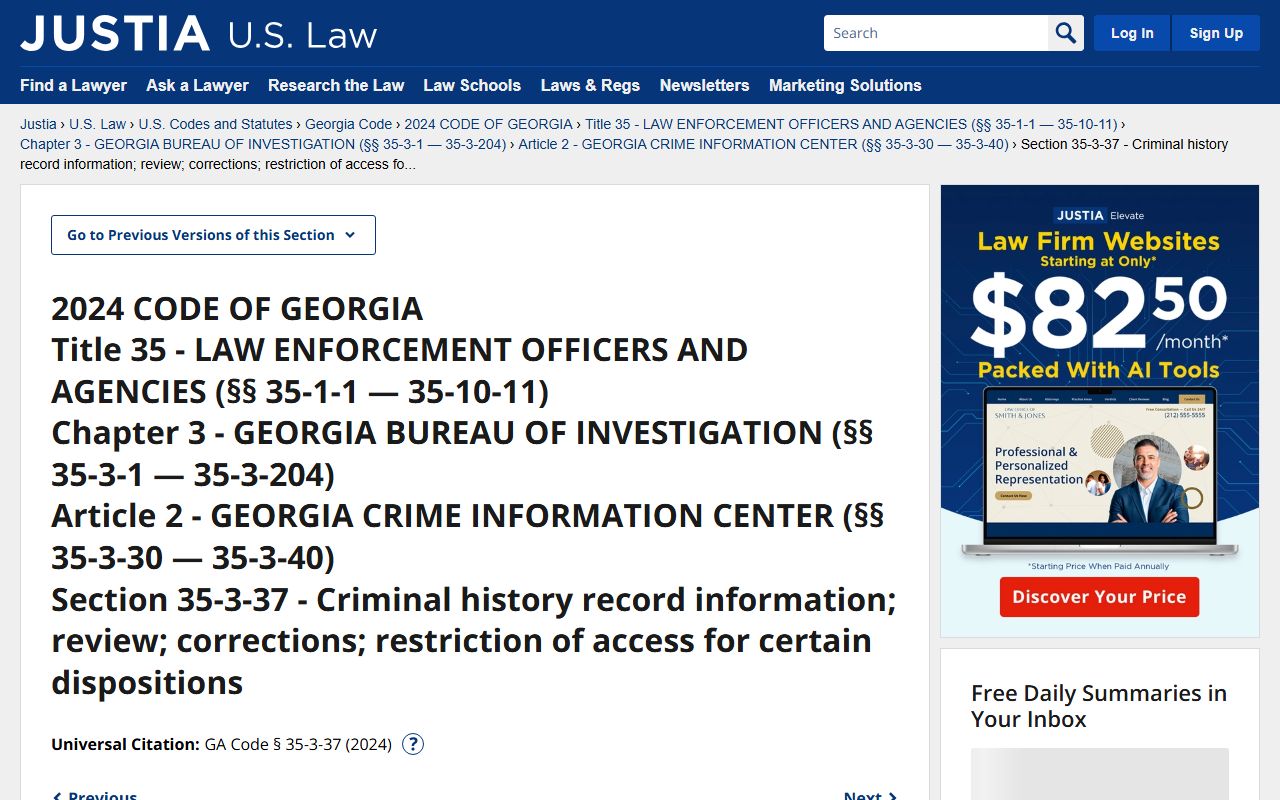
The Georgia record restriction statute controls what stays public and what gets pulled from common background checks after a qualifying case.
Sealed vs Restricted Records
A sealed file is closed from public view by a court order. A restricted record is pulled from public criminal history dissemination under Georgia's restriction statute. The two ideas overlap but are not the same.
| Topic | Sealed | Restricted |
|---|---|---|
| What It Affects | Court file or specific documents | Public criminal history check |
| How It Happens | Court order under court rules or statute | Eligibility under O.C.G.A. § 35-3-37 |
| Who May Still See It | Parties and authorized persons | Criminal justice agencies and some employers |
| How to Reverse | Motion to unseal in issuing court | Through GCIC or court action |
For sealed material, the request to unseal goes in as a motion in the court that sealed the file. Clerk staff cannot unseal a record on their own.
District Attorney, Solicitor-General, and Public Defender
The Gwinnett County District Attorney's Office prosecutes felony criminal cases in Superior Court. The Solicitor-General prosecutes misdemeanors in State Court. Defendants who cannot afford counsel can ask for court-appointed counsel through the Georgia Public Defender Council process, usually at first appearance or arraignment.
Court-appointed counsel is a constitutional right in criminal cases, not in civil cases. A person sued in Magistrate Court or filing for divorce does not get a public defender. For civil legal help, see Georgia Legal Aid, Atlanta Legal Aid, and the State Bar of Georgia.
Georgia State Criminal History Check
A Gwinnett court file is not the same as a statewide criminal history check. The Georgia Bureau of Investigation runs the GCIC criminal history check system. The GCIC product pulls information from agencies across Georgia and shows convictions, restricted records, and other case dispositions reported into the state index. Employers, licensing boards, and other agencies use GCIC under set rules.
The Gwinnett court files do not always sync to the GCIC product the same day. Restricted records may still show on a Gwinnett docket while no longer showing on a public GCIC check.
Federal Criminal Cases From Gwinnett
Federal crimes from Gwinnett do not get filed in Superior Court. They go to the U.S. District Court for the Northern District of Georgia. The U.S. Attorney's Office for the Northern District of Georgia handles federal prosecution. The official docket access is PACER, with electronic filing through CM/ECF. Appeals run to the U.S. Court of Appeals for the Eleventh Circuit.
Federal case types include federal drug charges, wire fraud, bank robbery, federal firearms cases, civil rights cases, immigration matters, and federal-question civil suits. A federal sentence sends the person to the Federal Bureau of Prisons, not Georgia DOC.
Booking to First Appearance
A Gwinnett arrest can start with the County Police, the Sheriff's Office, a municipal police department, Georgia State Patrol, or a warrant pickup. The booking happens at the Sheriff's intake. Jail staff confirm the person, search for holds and warrants, take property, photograph and fingerprint the arrestee, run medical and mental health screening, and assign housing.
Georgia arrestees usually get a first appearance soon after booking. The first appearance covers the charge, the right to counsel, and bond when bond is available. Serious felonies, probation holds, family violence cases, and out of county warrants can hold up release.